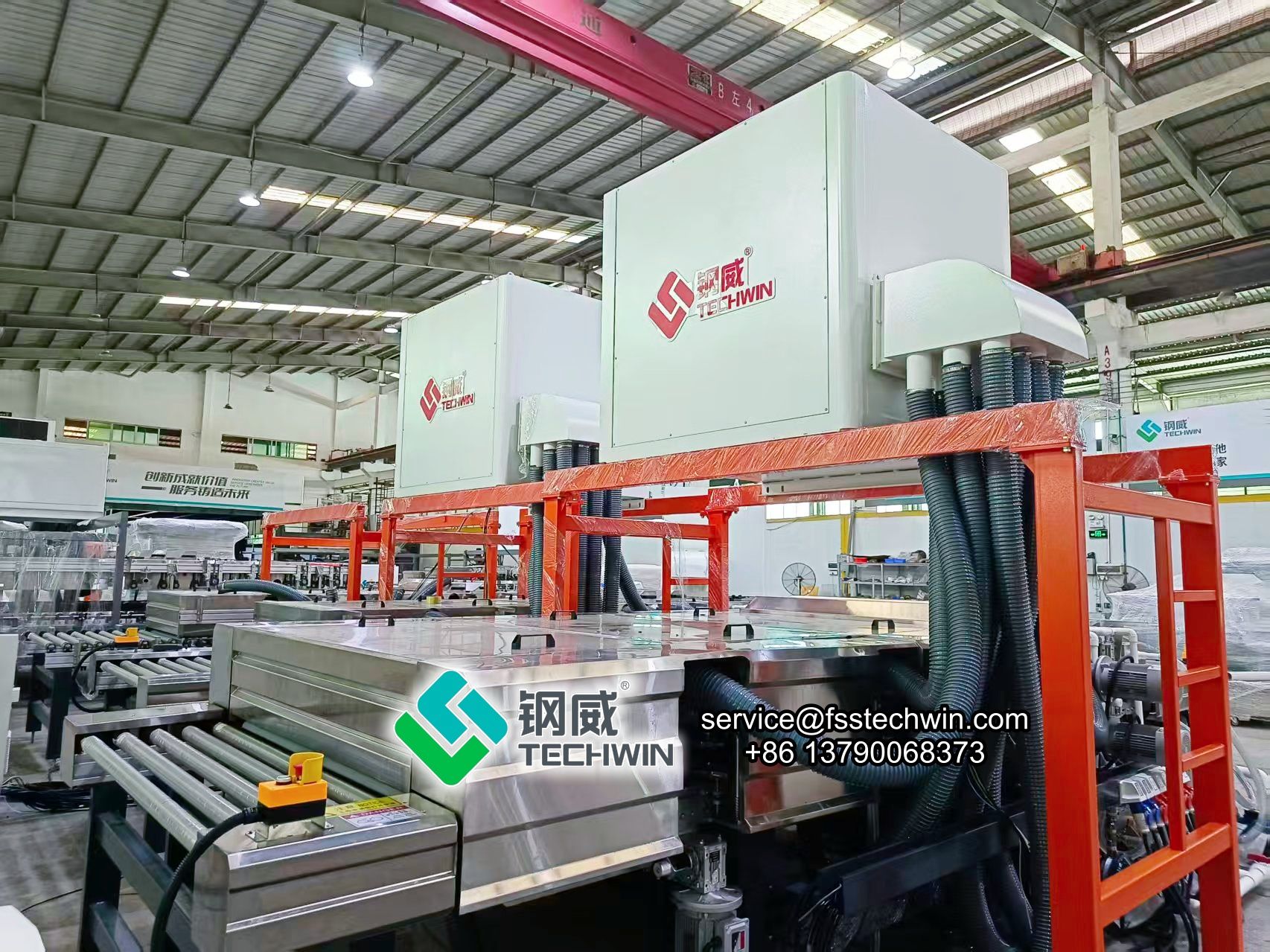


In modern glass fabrication, edge quality and production efficiency make or break your bottom line. Whether processing architectural glass, furniture panels, or decorative mirrors, achieving a smooth, chip-free pencil edge requires equipment built for precision and speed.
If your plant is facing bottleneck issues, high wheel-replacement downtime, or edge defects caused by machine vibration, it’s time to look closely at your edging line’s core architecture. Here are three critical engineering features that redefine pencil edging performance.

Achieving a polished, perfectly rounded pencil edge usually requires multiple stages: rough grinding, fine shaping, and multi-step polishing.
A 12-spindle line per machine provides the exact gradient needed for maximum throughput:

Speed means nothing if machine vibration ruins the glass edge. High spindle speeds generate strong dynamic forces; without proper dampening, these forces lead to visible edge chatter and uneven grinding wheel wear.
Downtime is the hidden cost in any glass processing factory. Standard spindle setups often require operators to squeeze into cramped spaces with hand tools just to change a worn grinding wheel.
Investing in the right pencil edging technology directly impacts your output quality and operational downtime. By combining 12 precision spindles, a heavy vibration-dampening base, and effortless turn-out spindle maintenance, you get a line engineered for non-stop productivity.
*Ready to upgrade your glass edge processing line? Contact our technical team today to request a quote or see a video demonstration of our 12-spindle pencil edging machine in action!