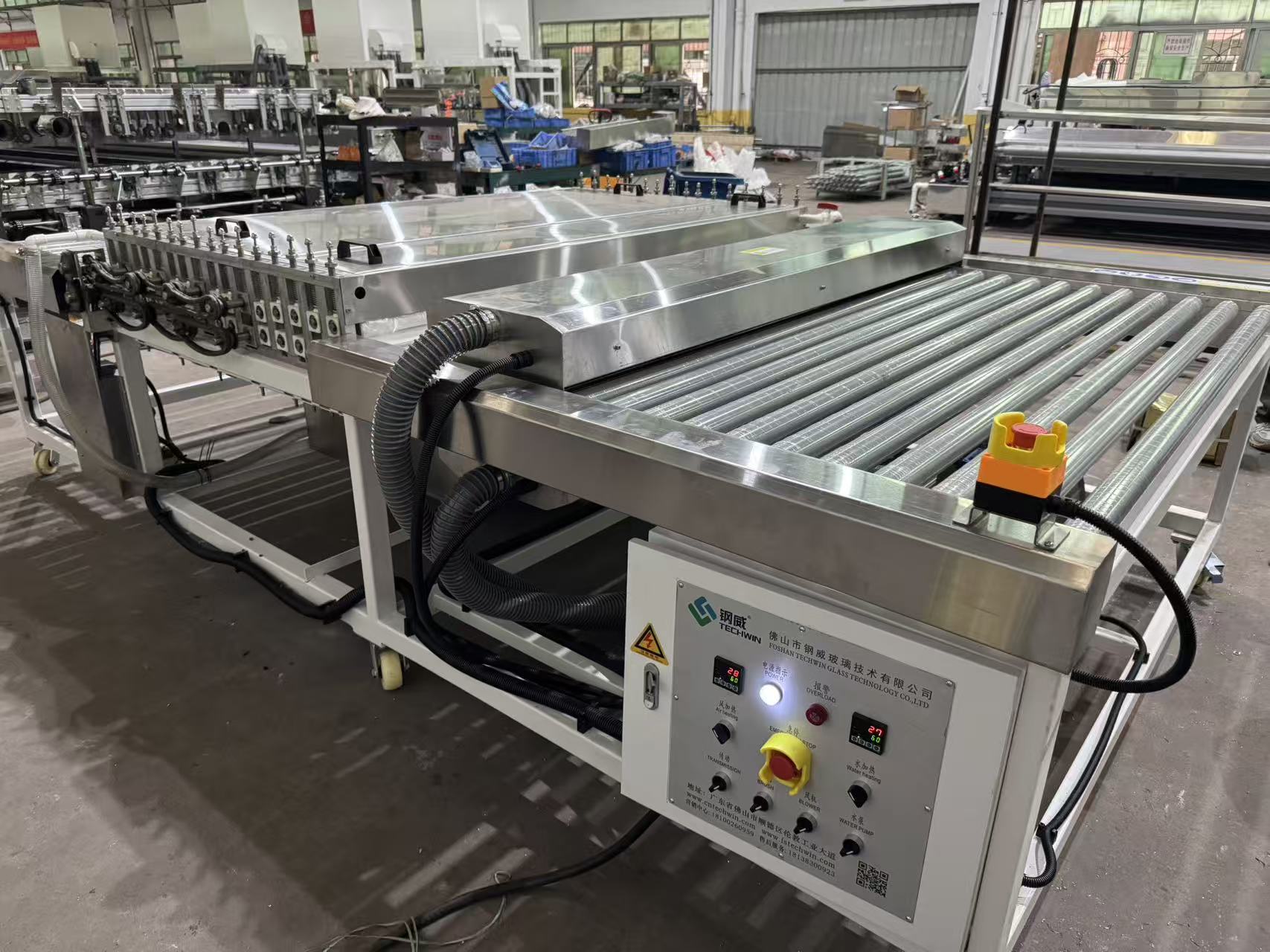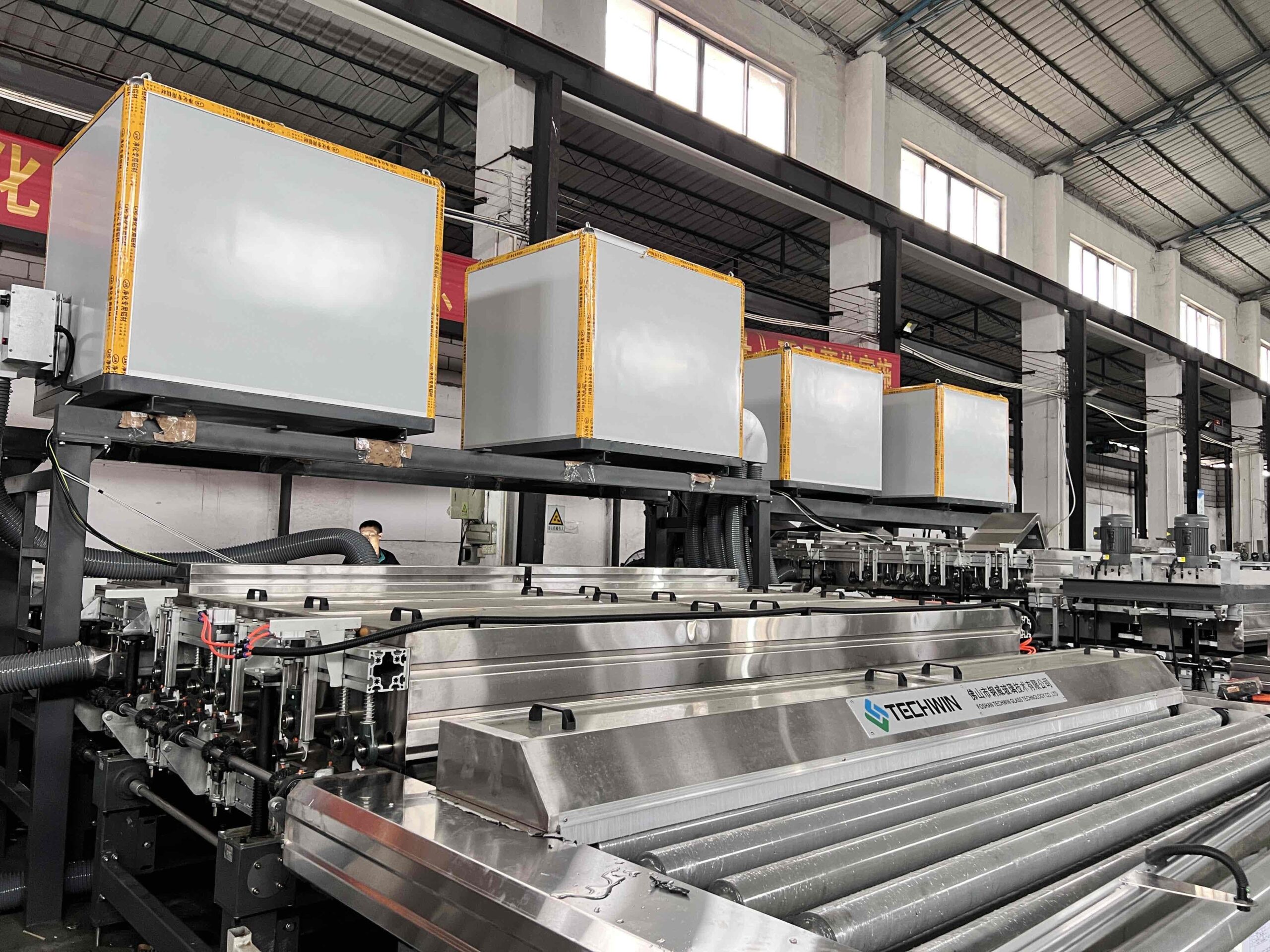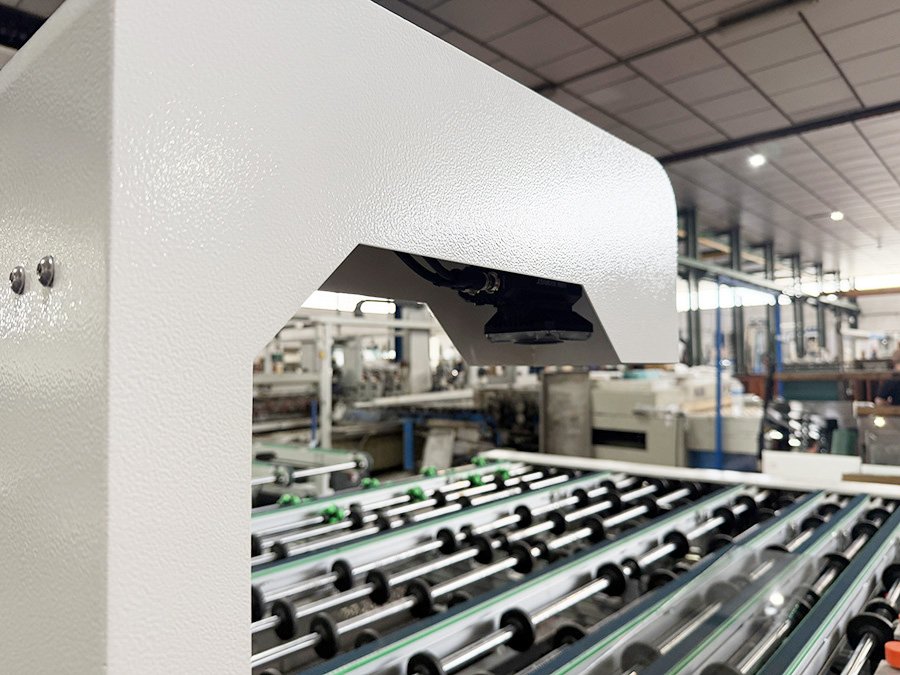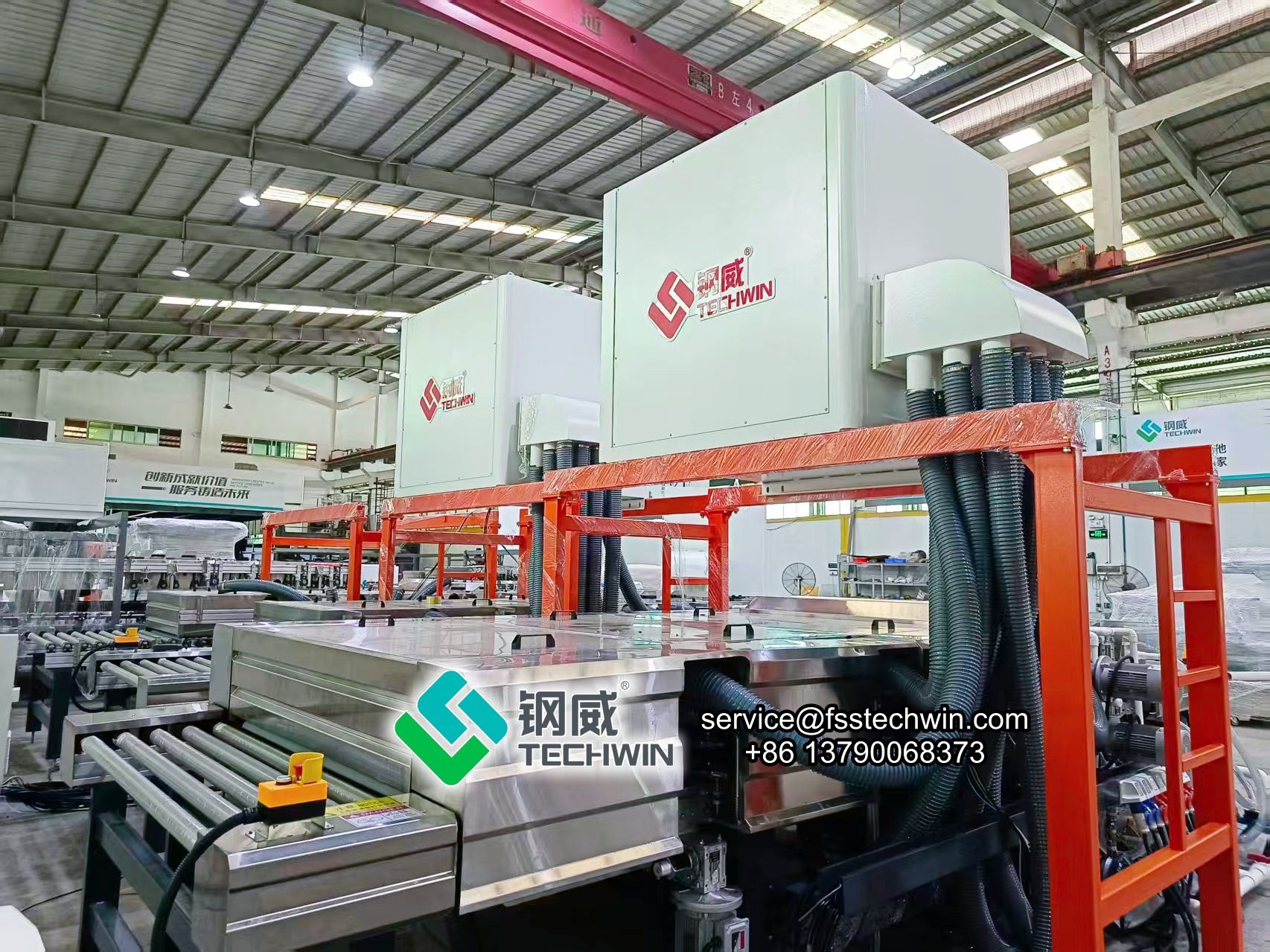
A glass washing machine cleans and dries flat glass before subsequent processing such as tempering, laminating, insulating glass production, printing, coating or assembly.
Although the basic principle is straightforward, a professional glass washing machine is a coordinated system of conveying, pre-rinsing, mechanical cleaning and drying.
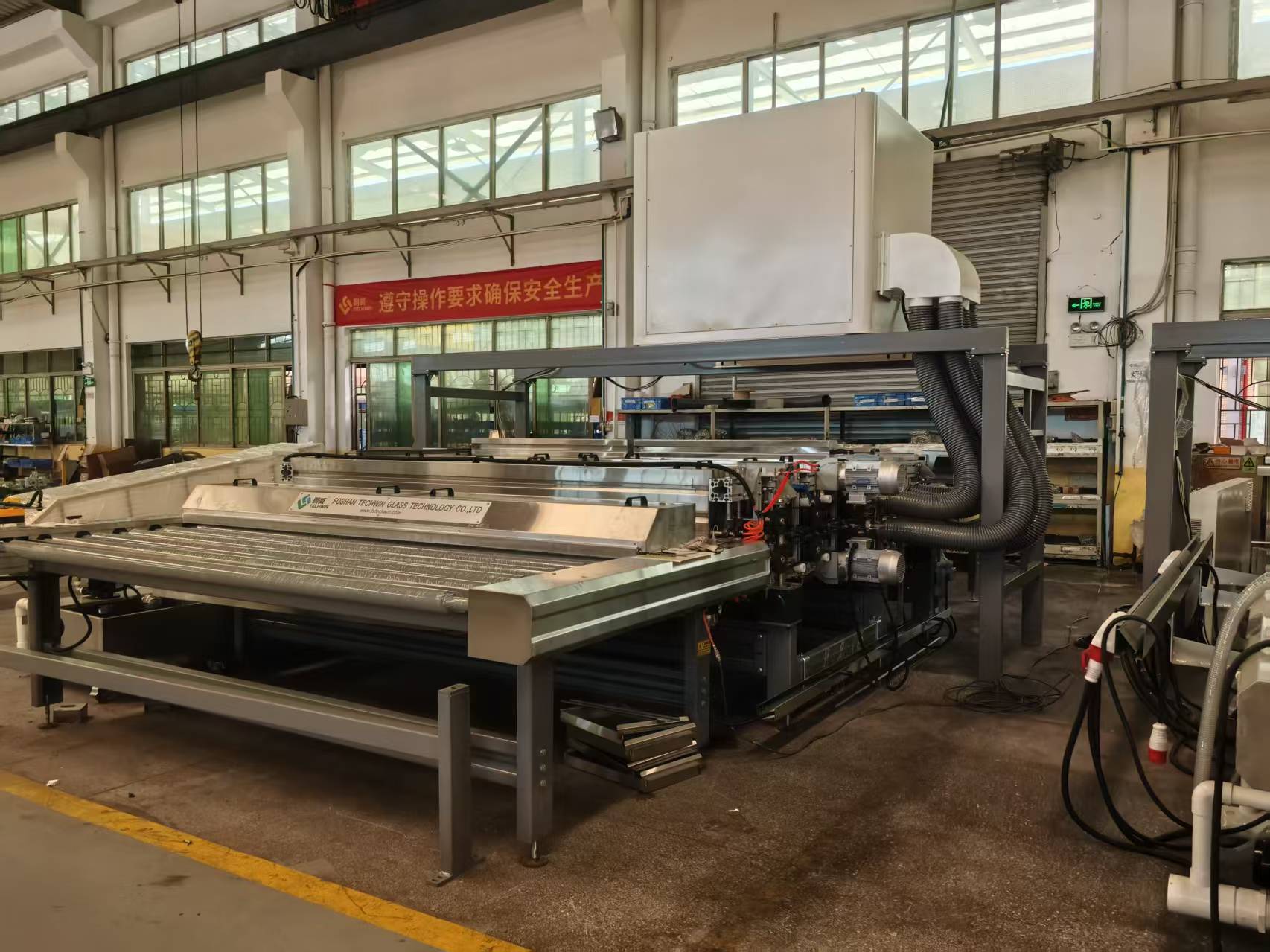
The typical working process is:
Convey → Pre-Rinse → Brush Zone → Drying Section → Unload
Each section performs a specific function to ensure that the glass is delivered clean and dry to the next production process.
1. Glass Conveying
The process begins when the glass sheet enters the washing machine through the conveying section.
The conveyor transports the glass smoothly and continuously through each washing stage.
Stable conveying is important because the glass must maintain a consistent position and speed as it passes through the pre-rinse, brush and drying sections.
The conveying system is designed according to factors such as:
- Glass size
- Glass thickness
- Glass weight
- Production speed
- Machine configuration
For automatic production lines, the conveyor can also be integrated with upstream and downstream equipment.
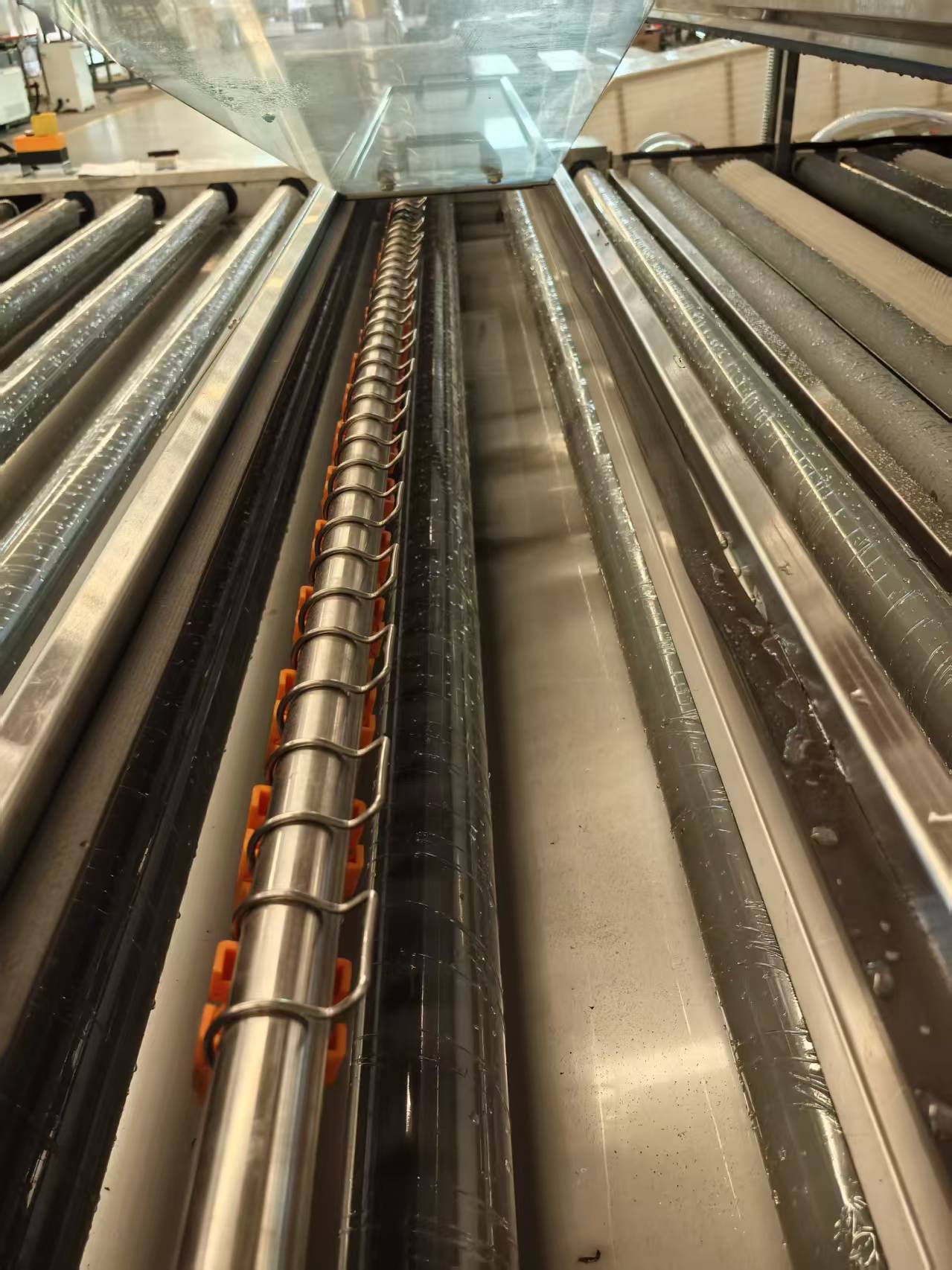
2. Pre-Rinse Section
After entering the machine, the glass first passes through the pre-rinse section.
Water is sprayed onto the glass surface to remove loose particles and soften or wash away initial contamination before the glass reaches the brushes.
The pre-rinse process helps reduce the amount of dirt carried into the brush zone.
This is particularly useful when processing glass with:
- Glass dust
- Fine particles
- Cutting residues
- Surface contamination
- Other loose debris
The pre-rinse system is an important part of the overall washing process because it prepares the glass surface for mechanical cleaning.
3. Brush Zone
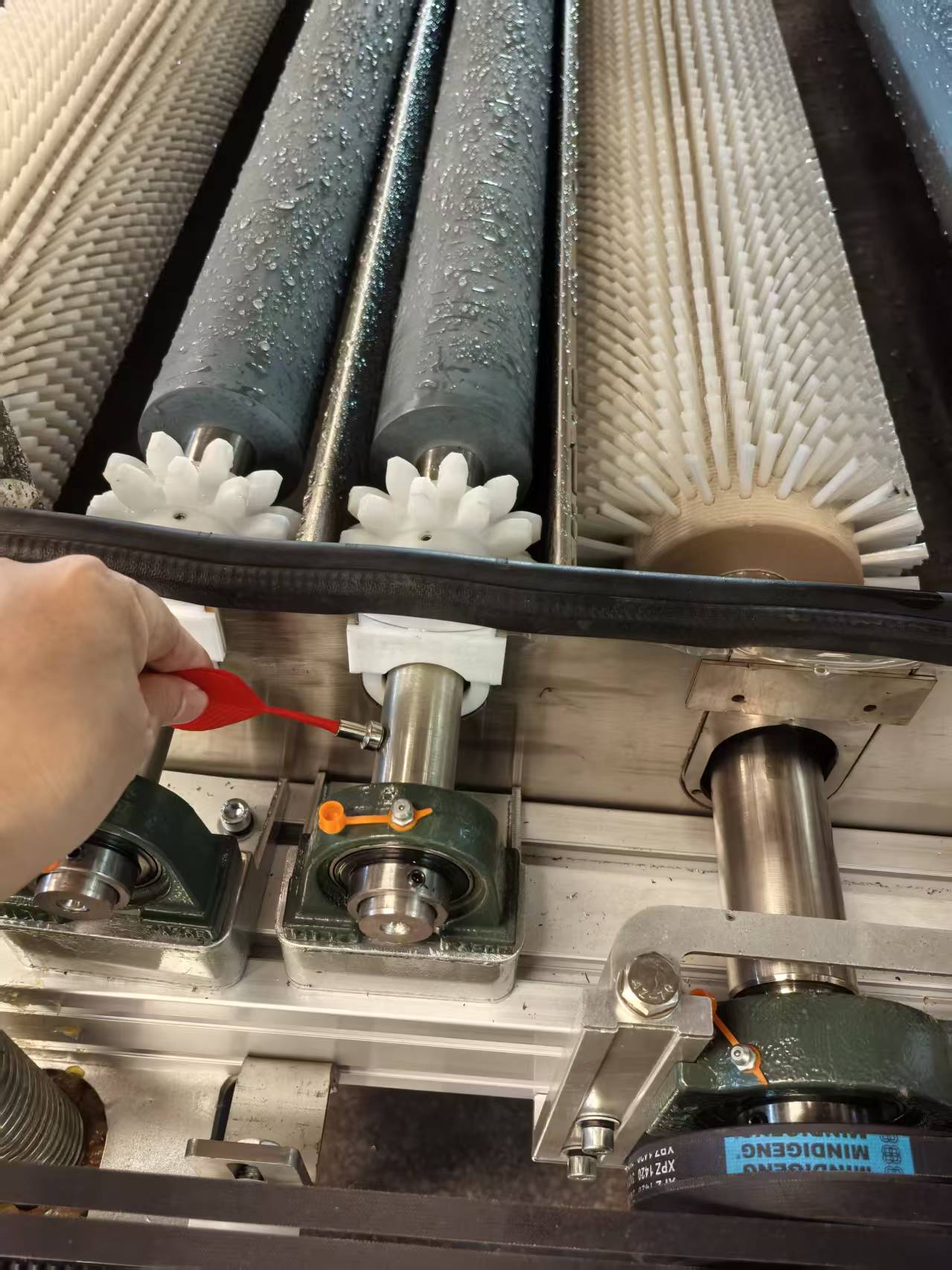
After pre-rinsing, the glass enters the brush zone.
This is the main mechanical cleaning section of the washing machine.
Rotating brushes contact the glass surface while water is supplied to the washing area. The combination of brush movement and water removes remaining contaminants from the glass.
Depending on the machine design and application, the brush zone can include different numbers and types of brushes.
Typical considerations include:
- Number of brush pairs
- Brush material
- Brush diameter
- Brush rotation speed
- Brush pressure
- Glass thickness
- Glass surface characteristics
Washing Low-E Glass
Low-E and other coated glass require particular attention when selecting the brush configuration.
The brush material, contact pressure and washing parameters should be appropriate for the coating.
For Low-E applications, TECHWIN can configure washing machines with suitable soft brushes and other components according to the glass type and production requirements.
4. Drying Section
After passing through the brush zone, the glass enters the drying section.
The purpose of the drying section is to remove water from the glass surface before it leaves the machine.
Air knives direct high-velocity air across the glass surface, pushing water away from the glass.
Drying performance depends on factors such as:
- Air pressure
- Air volume
- Air-knife design
- Air-knife position
- Glass thickness
- Glass speed
- Machine sealing
A properly designed drying section is essential when the glass will immediately enter another production process.
Poor drying can result in:
- Water droplets
- Water marks
- Residual moisture
- Uneven surface appearance
5. Glass Unloading
After drying, the clean glass reaches the unloading section.
The glass is transferred out of the washing machine through the outfeed conveyor.
Depending on the production line, the washed glass can then be transferred to:
- Tempering equipment
- Insulating glass production
- Laminating equipment
- Printing equipment
- Inspection stations
- Storage or stacking systems
- Other downstream processing equipment
For automated production lines, the unloading section can be integrated directly with downstream conveying and handling systems.
6. Complete Glass Washing Process
The complete working principle can therefore be summarized as:
Step 1 — Convey
The glass enters the machine and is transported at a controlled speed.
↓
Step 2 — Pre-Rinse
Water removes loose particles and prepares the surface for brush cleaning.
↓
Step 3 — Brush Zone
Rotating brushes and water remove remaining contaminants from the glass surface.
↓
Step 4 — Drying
Air knives remove water from the glass surface.
↓
Step 5 — Unload
The clean and dry glass leaves the washing machine and continues to the next process.
Convey → Pre-Rinse → Brush Zone → Drying → Unload
7. What Determines Glass Washing Quality?
A good washing result depends on more than the number of brushes.
Important factors include:
Glass Speed
The glass must remain in each processing section for an appropriate amount of time.
Increasing the production speed may require corresponding adjustments to the washing and drying system.
Brush Configuration
The number, type and arrangement of brushes should match the application.
Brush Pressure
Insufficient pressure may reduce cleaning performance, while excessive pressure is unnecessary and may be unsuitable for certain glass surfaces.
Water Quality
Water containing excessive minerals or contaminants can contribute to water spots or deposits after drying.
Drying Performance
The air-knife system must provide sufficient air volume and pressure for the selected glass speed and thickness.
Machine Maintenance
Brushes, water tanks, pumps, air knives, conveyors and other components should be inspected and maintained regularly to maintain stable washing performance.
8. How Does a Glass Washer Handle Low-E Glass?
Low-E glass requires a washing system designed around its coated surface.
The key considerations include:
- Appropriate brush type
- Suitable brush pressure
- Controlled glass conveying
- Proper water supply
- Effective drying
TECHWIN offers configurations for Low-E glass applications, including soft-brush washing systems designed to clean coated glass while minimizing unnecessary mechanical contact.
9. Horizontal vs. Vertical Glass Washing Machines
Glass washing machines can be designed in different configurations depending on the production process.
Horizontal Glass Washing Machine
The glass is transported horizontally through the machine.
Typical applications include:
- Architectural glass
- Tempered glass
- Solar glass
- Appliance glass
- Insulating glass production
- High-volume flat glass processing
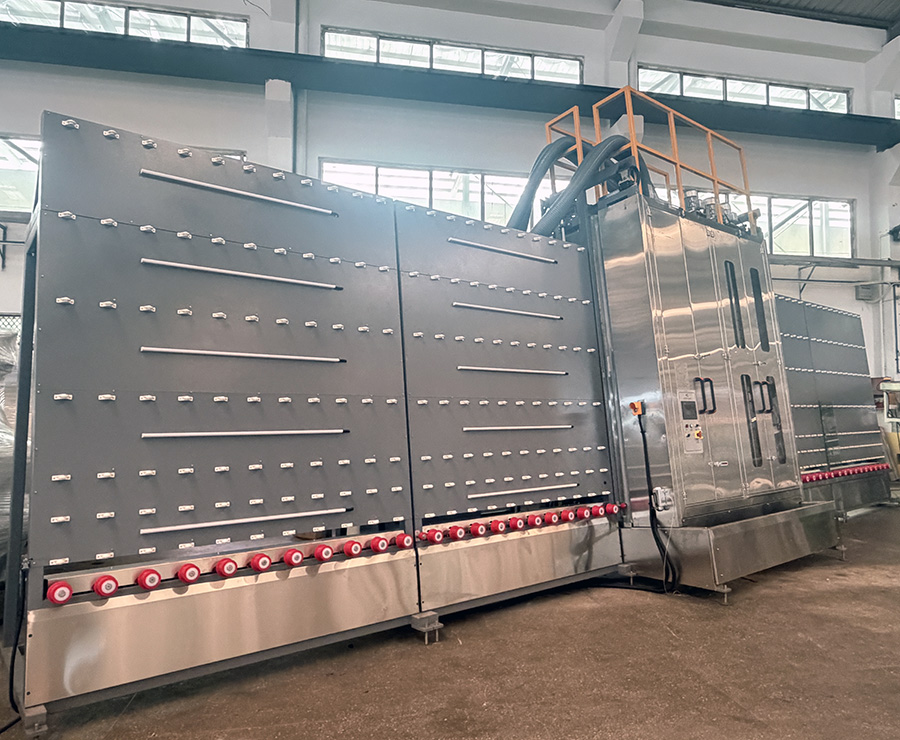
Vertical Glass Washing Machine
The glass is transported vertically through the washing machine.
This configuration can be suitable for production environments where glass is handled or transferred vertically, or where factory space and production flow require a vertical solution.
The appropriate configuration depends on the glass dimensions, production process, factory layout and downstream equipment.
10. How to Select a Glass Washing Machine
Before selecting a glass washer, consider the complete production requirement rather than only the maximum glass size.
Important parameters include:
- Maximum glass size
- Minimum glass size
- Glass thickness
- Glass type
- Coated or Low-E glass
- Required production speed
- Required washing quality
- Upstream equipment
- Downstream equipment
- Available factory space
- Automation requirements
A suitable washing machine should match the capacity and working conditions of the complete production line.
11. TECHWIN Glass Washing Machine Solutions
TECHWIN manufactures glass washing machines for different glass-processing applications.
Available configurations include:
- Horizontal glass washing machines
- Vertical glass washing machines
- High-speed glass washing machines
- Jumbo glass washing machines
- Low-E glass washing machines
- Solar glass washing machines
- Disc-brush washing machines
- Sponge roller glass washing machines
Machine configurations can be developed according to glass dimensions, thickness, production speed and application requirements.
FAQ
What are the main stages of a glass washing machine?
The typical process is:
Convey → Pre-Rinse → Brush Zone → Drying → Unload
What is the purpose of the pre-rinse section?
The pre-rinse section removes loose particles and initial contamination before the glass enters the brush zone.
What does the brush zone do?
The brush zone provides the main mechanical cleaning action. Rotating brushes and water remove contaminants from the glass surface.
How is the glass dried?
Air knives blow high-velocity air across the glass surface to remove water after washing.
Can a glass washing machine clean Low-E glass?
Yes. The machine can be configured with suitable brushes and washing parameters for Low-E and other coated glass.
Why is drying important?
The glass should leave the machine clean and dry so that water droplets or residual moisture do not affect subsequent processing.
Need a Glass Washing Machine for Your Production Line?
The correct glass washer depends on your glass dimensions, thickness, surface type, production speed and downstream process.
TECHWIN can help develop a washing configuration based on your actual production requirements.
Contact TECHWIN to discuss your glass washing machine project.