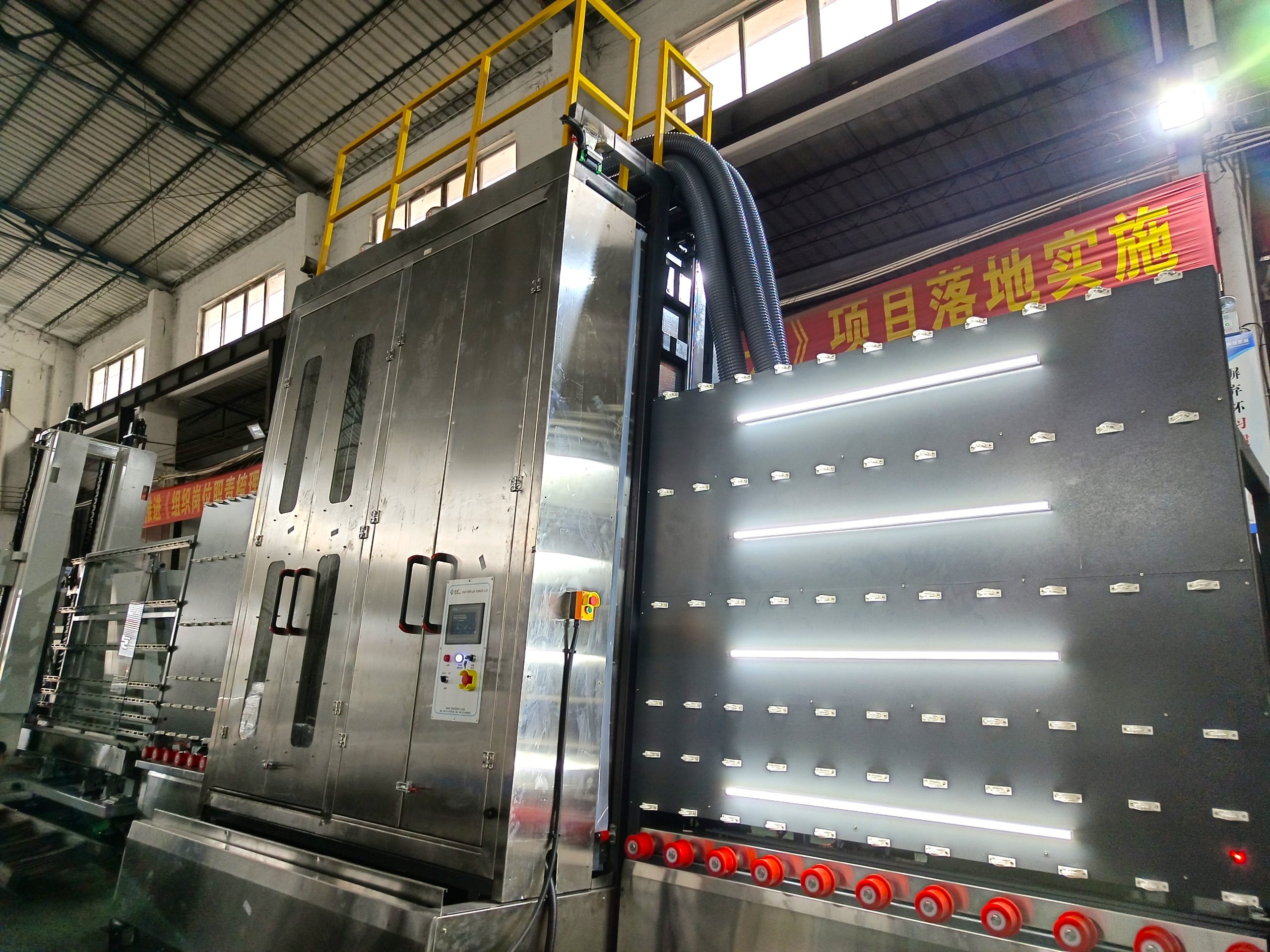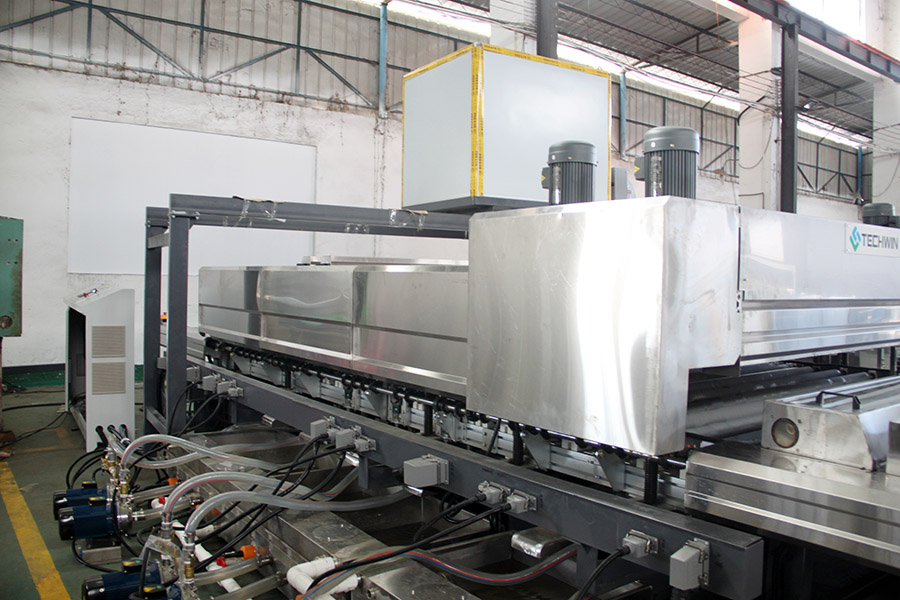
Water marks on glass after washing are a common problem in glass processing factories. Even when a glass washing machine removes dust, cutting debris, and other surface contaminants, white spots, streaks, or cloudy marks may remain after the glass passes through the drying section.
These defects can affect the appearance of architectural glass, insulating glass units (IGUs), furniture glass, appliance glass, and other products requiring a clean, dry surface.
To solve the problem effectively, operators need to identify whether the marks come from water quality, incomplete rinsing, brush contamination, drying performance, or the glass itself.
1. Poor Rinse-Water Quality
Water containing dissolved minerals can leave deposits on the glass surface when the remaining water evaporates. This is particularly noticeable when the water contains high levels of dissolved solids.
How to check:
- Check the source and quality of the water supplied to the washing machine.
- Measure water conductivity or total dissolved solids (TDS), where appropriate.
- Inspect the final-rinse water separately from the washing-tank water.
- Review whether the water treatment system requires maintenance.
How to improve it:
Where water quality is the cause, consider reverse osmosis (RO) or deionized (DI) water for the final rinse, depending on the glass type and downstream requirements. The appropriate water quality should be determined according to the glass manufacturer’s recommendations and the requirements of the subsequent process.
2. Inadequate Rinsing After the Brush Zone
The brush zone removes surface contaminants, but loosened dirt and cleaning residues must also be removed before drying.
If the rinsing stage does not adequately remove these residues, marks may appear after the glass dries.
Possible causes include:
- Insufficient or uneven water flow.
- Blocked spray nozzles.
- Contaminated recirculating water.
- Incorrectly maintained filters.
- Cleaning-agent residues remaining on the glass.
Recommended action:
Inspect the water spray system, filters, tanks, and drainage. Confirm that the glass receives effective rinsing before entering the drying section.
3. Contaminated Brushes or Water Tanks
Glass powder and fine particles can accumulate in the washing system. If maintenance is inadequate, contaminants may be transferred back onto the glass.
Inspect the brush surfaces, water tanks, filtration system, and accessible areas where debris may collect. Clean the system according to the machine manufacturer’s maintenance instructions.
Brush condition and compatibility are particularly important when processing coated glass or other surfaces that are sensitive to scratches.
4. Incomplete Drying or Uneven Airflow
Sometimes the washing process is effective, but water remains on the glass after it passes through the drying section.
When this water evaporates, it may leave visible spots or streaks.
Check:
- Whether the blower and air-delivery system operate normally.
- Whether air filters require cleaning.
- Whether the air knives are clean and correctly positioned.
- Whether the glass travels through the drying section at an appropriate speed.
- Whether water remains around the edges or across the entire surface.
Any adjustments to air-knife position or operating parameters should follow the manufacturer’s instructions for the specific machine.
5. How to Identify the Actual Cause
Use the following table as a starting point for troubleshooting.
| Observed problem | First area to investigate |
|---|---|
| White spots after drying | Final-rinse water quality and mineral deposits |
| Long water streaks | Rinsing effectiveness and drying airflow |
| Dirty marks that repeat | Brushes, rollers, or other contaminated contact surfaces |
| Marks concentrated near the edges | Water removal and drying performance around the edges |
| Marks that existed before washing | Incoming glass condition or previous processing steps |
These patterns are diagnostic clues, not definitive proof. Compare the glass before washing, after the brush zone where safely observable, and after drying to determine where the defect first appears.
6. Establish a Consistent Washing Process
For stable glass-cleaning results, every section of the washing machine must work together:
- Conveying: Transport the glass smoothly and consistently.
- Pre-rinsing: Remove loose particles and prepare the surface for brushing.
- Brush zone: Remove remaining contaminants using suitable brushes and controlled contact.
- Drying section: Remove residual water using an appropriately maintained air system.
- Unloading: Transfer the clean glass without introducing new fingerprints, dust, or marks.
A problem in one section can affect the final result, even when the other sections operate normally.
Conclusion
Water marks after glass washing are not always caused by the drying system alone. Water quality, insufficient rinsing, contaminated brushes, and uneven airflow can all contribute to the problem.
The most effective approach is to identify when and where the marks appear, inspect the relevant section, and change one variable at a time.
TECHWIN manufactures industrial glass washing machines designed for different glass sizes and processing requirements. If your factory is experiencing persistent water marks or inconsistent drying, contact our team to discuss your application and washing-process requirements.