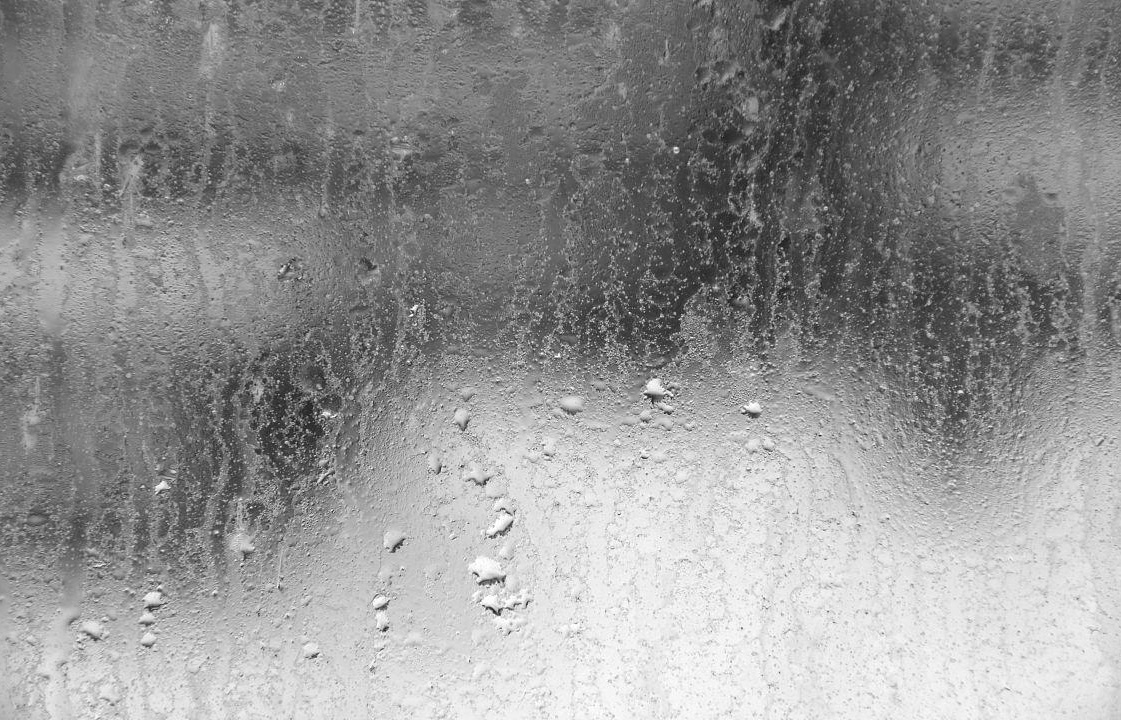
Streaks on glass after washing can affect product appearance and create problems for subsequent processes such as insulating glass assembly, printing, coating, or tempering.
However, not all streaks have the same cause. Some originate from mineral deposits or cleaning residues, while others result from contaminated contact surfaces or uneven drying.
The most effective way to solve the problem is to identify the streak pattern and determine when it first appears.
1. Mineral Deposits in the Water
Water containing dissolved minerals can leave visible residues when it dries on the glass.
These streaks may become more noticeable under strong inspection lighting, particularly on glass intended for applications requiring high surface cleanliness.
Recommended action:
- Check the quality of the incoming and final-rinse water.
- Measure conductivity or TDS where appropriate.
- Inspect the final-rinse system and water treatment equipment.
- Review whether water quality meets the requirements of the glass and downstream process.
If dissolved minerals are responsible, appropriate water treatment may be necessary. RO or DI water can be considered for the final rinse, depending on the application.
2. Contaminated Brushes
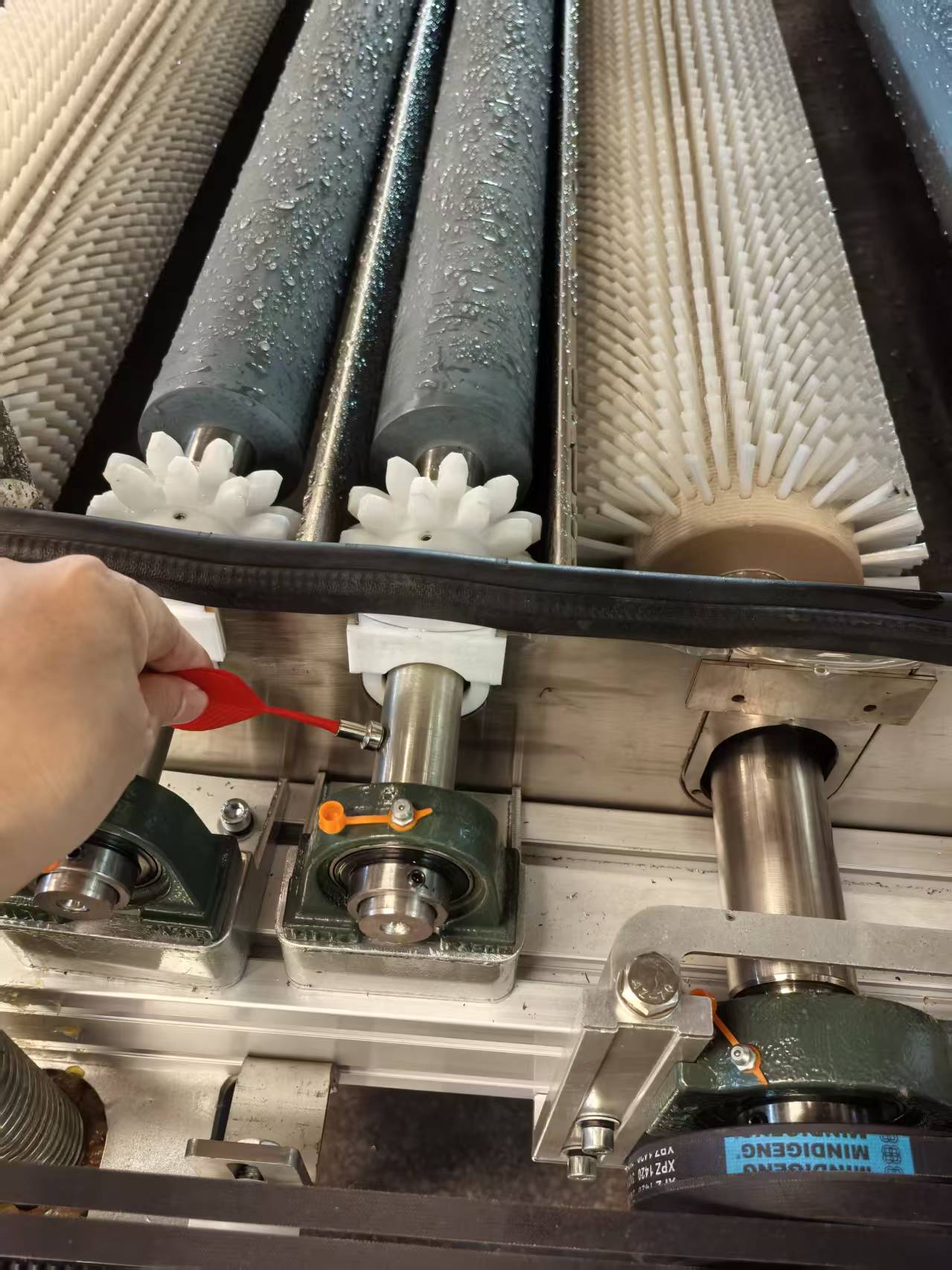
Dirty brushes may spread contaminants across the glass surface rather than removing them completely.
Inspect the brushes for accumulated glass powder, debris, or other contamination. Check brush condition and confirm that the selected brush type is suitable for the glass being processed.
If streaks occur only with particular glass types, compare the incoming surface condition and processing requirements before changing brush settings.
3. Incomplete Rinsing
The brush zone removes contaminants, but the rinsing stage must remove loosened particles and remaining cleaning residues.
If the rinsing system does not work effectively, residue may remain and become visible after drying.
Check spray nozzles, water flow, filtration, tank condition, and drainage. Ensure that the final-rinse stage is supplied with suitable water.
4. Uneven Airflow in the Drying Section
Airflow removes water from the glass after washing. If the air-delivery system is uneven or obstructed, water may remain in certain areas and produce streaks.
Inspect the blower, filters, ducts, and air knives according to the manufacturer’s maintenance instructions.
Record whether the streaks appear across the whole sheet, along one edge, or in a repeated pattern. This information helps narrow the investigation.
5. Dirty Rollers or Contaminated Unloading Areas
Sometimes streaks or smudges are introduced after the glass has already been cleaned.
Inspect accessible rollers and contact surfaces in the drying and unloading areas. Look for dirt, oily contamination, damaged components, or debris.
If marks repeat at regular intervals, compare the spacing between the marks with the movement of the suspected roller or component.
Also check whether fingerprints or dust are introduced during manual handling after unloading.
6. How to Diagnose Streaks
| Streak appearance | Possible source |
|---|---|
| White or cloudy streaks after drying | Mineral deposits or residual contamination |
| Long streaks aligned with water flow | Uneven drying or water distribution |
| Repeated marks at regular intervals | Contaminated rollers or rotating components |
| Oily or smeared streaks | Contaminated brushes, rollers, or handling |
| Streaks already visible before washing | Incoming glass defects or earlier processing |
The appearance of a streak alone cannot confirm the cause. Inspect the glass before washing and compare it with the result after drying.
7. A Practical Method for Improving Results
Follow these steps when streaks appear:
- Record the glass type, thickness, size, and production speed.
- Inspect the incoming glass to identify pre-existing defects.
- Check the pre-rinsing and brush sections for contamination.
- Verify the quality of the final-rinse water.
- Inspect the drying system and accessible conveyor components.
- Make one controlled adjustment at a time.
- Confirm the result using representative production glass.
Documenting the findings helps operators identify recurring problems and reduces unnecessary changes to machine settings.
Conclusion
Streaks after glass washing may originate from water quality, inadequate rinsing, contaminated brushes, uneven drying, or dirty contact surfaces.
By identifying where the streaks first appear, operators can focus on the relevant section and improve cleaning consistency.
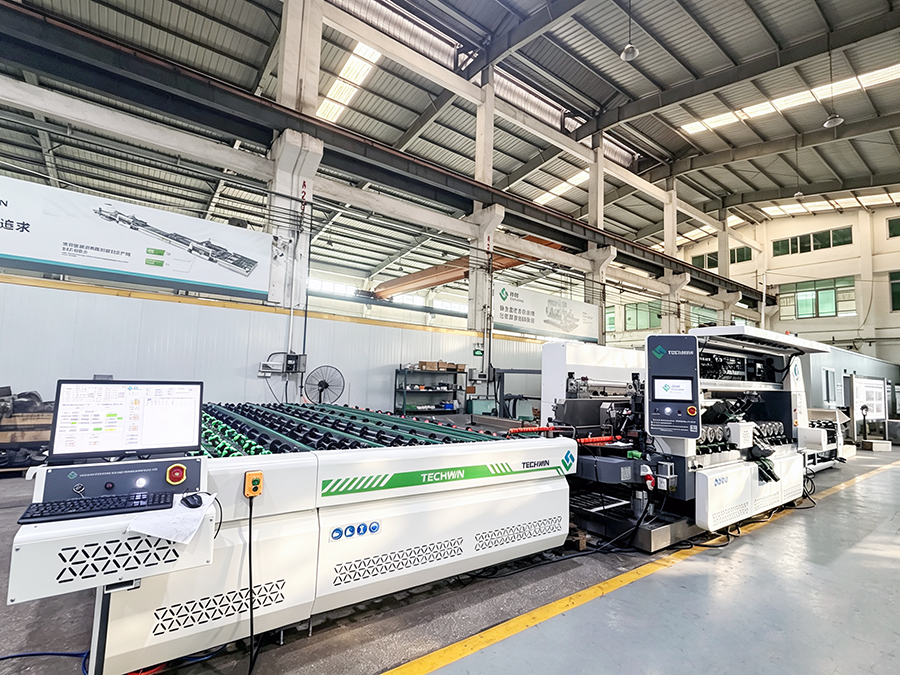
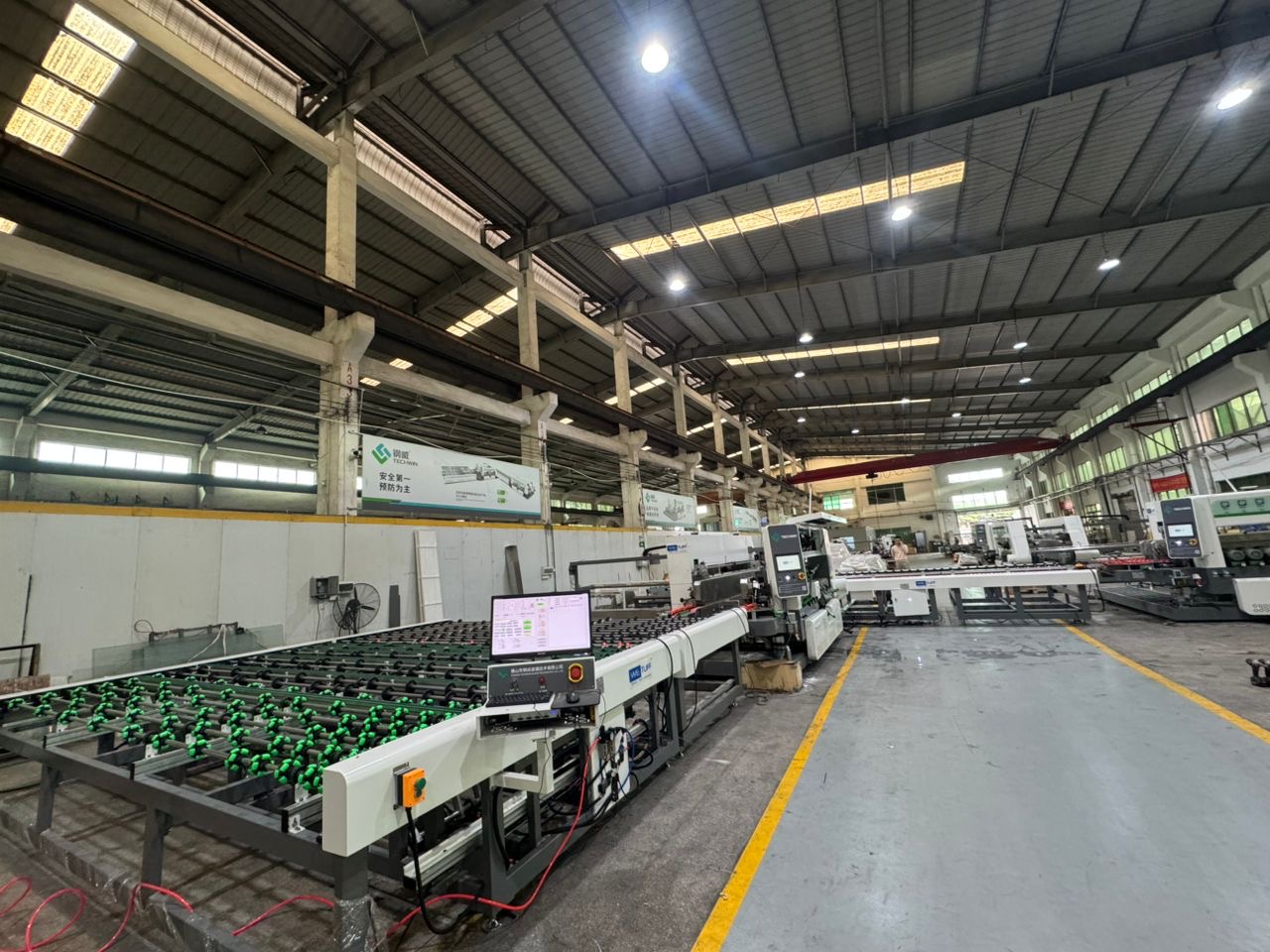
TECHWIN manufactures industrial glass washing machines for a range of glass-processing applications. Contact our team to discuss your production requirements and the most suitable washing solution for your factory.